
UAB „Krovinių Terminalas” is committed to the safety of the locals and has prepared information about its activities to help you avoid being misled by false reports and frightened by unknown or non-existent dangers.

Specific characteristics of the Terminal’s activity

UAB „Krovinių Terminalas” is a high-level hazardous facility located in the northern part of Klaipėda State Seaport. To the north and north-west of UAB „Krovinių Terminalas” is located AB „Klaipėdos nafta” (a high level hazardous facility), to the north – Melnrage settlement, to the east – the Vitė district of Klaipėda city, to the east and south-east – AB „Klaipėdos jūrų krovinių kompanija” (a high level hazardous facility). The Terminal is guided in its activities by the Regulations on the Prevention, Elimination and Investigation of Industrial Accidents, approved by the Government of the Republic of Lithuania on the 10th of September 2008 by Resolution No. 913. A safety report has been prepared in accordance with the requirements of these regulations and notices have been given to the public.

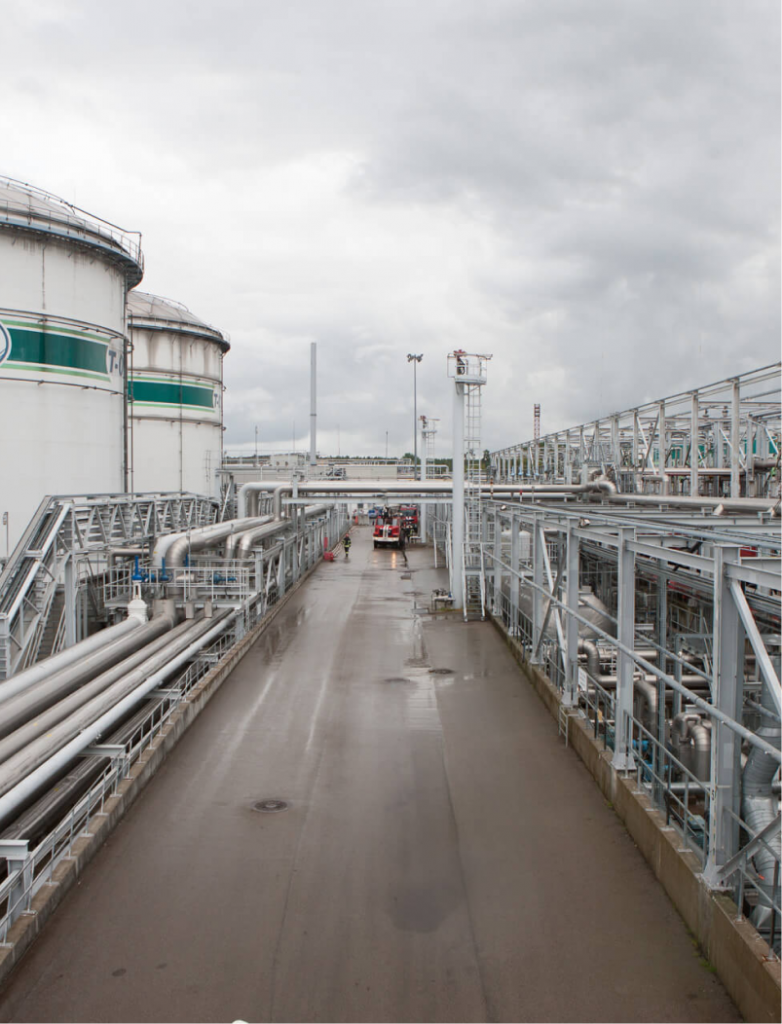
Products are unloaded and loaded in the area of the Terminal in a closed pipeline.

Characteristic and consequences of possible accidents

Light petroleum products have the usual odour of motor fuels and evaporate. These vapours (volatile hydrocarbons) are flammable and heavier than air, and in the event of an accident and in the event of adverse winds, they may accumulate in lower areas, i.e. basements and tunnels. Volatile hydrocarbons are detectable at a concentration of 0.3 mg/m³ in the air. According to the Lithuanian hygiene standard HN 35:2007 “Concentration limits for pollutants in the ambient air”, the maximum permissible concentration (MPC) of volatile organic compounds (VOCs) in the ambient air of residential environments is up to 5,0 mg/m³. The greatest risk to employees of the terminal and to employees and residents of nearby companies may be from substances released into the environment during an accident. In the event of an accident, vapours and gases of petroleum products may be released into the air, posing a fire and explosion hazard.

In the event of an explosion, people may be affected by the blast, and in the event of a fire, they may suffer heat damage and poisoning from the combustion of products such as:

  • carbon monoxide (CO);
  • carbon dioxide (СО²);
  • nitrogen oxide (NOx);
  • sulphur dioxide (SO²);
  • hydrocarbons (CxHx);
  • particulate matter, etc.

An explosion of petroleum product gases can occur from any source of fire (a spark, cigarette butt, short circuit, etc.). If smoke is observed, one should avoid going near it, as it can cause suffocation due to lack of oxygen and poisoning from the toxic aerosols it contains.

Signs of poisoning may include: swelling of the upper respiratory tract and lungs, laryngeal and bronchial spasms, depressive effects on the central nervous system.

Actions in an emergency

The public will be notified of an industrial accident by a siren (range – 1200 m). After the siren is switched off, the residents of Melnrage will be informed via loudspeakers in Molo Street.

Veiksmai avarijos metu

The following information will be disclosed:

  • the location of the accident (fire);
  • what products have been spilt (ignited);
  • which direction the wind is blowing and in which direction it is carrying the hydrocarbon (smoke) cloud;
  • what must be done by residents encompassed by the contaminated area.
  • In case the emergency effect spread outside the sanitary zone of UAB „Krovinių Terminalas“, it will seek assistance from Klaipėda City Municipality, which will organize the information and evacuation of the residents who have entered the hazardous zone.

Emergency Preparedness

UAB „Krovinių Terminalas“ has prepared a safety report which includes:

  • examination of the causes and consequences of major industrial accidents,
  • hazard identification, risk assessment analysis,
  • description of protective measures to prevent and mitigate the consequences of accidents,
  • The conclusions of the safety report established that the safety management system policy implemented by UAB „Krovinių Terminalas“ complies with the regulatory requirements both in the event of day-to-day operations and in the event of an emergency.

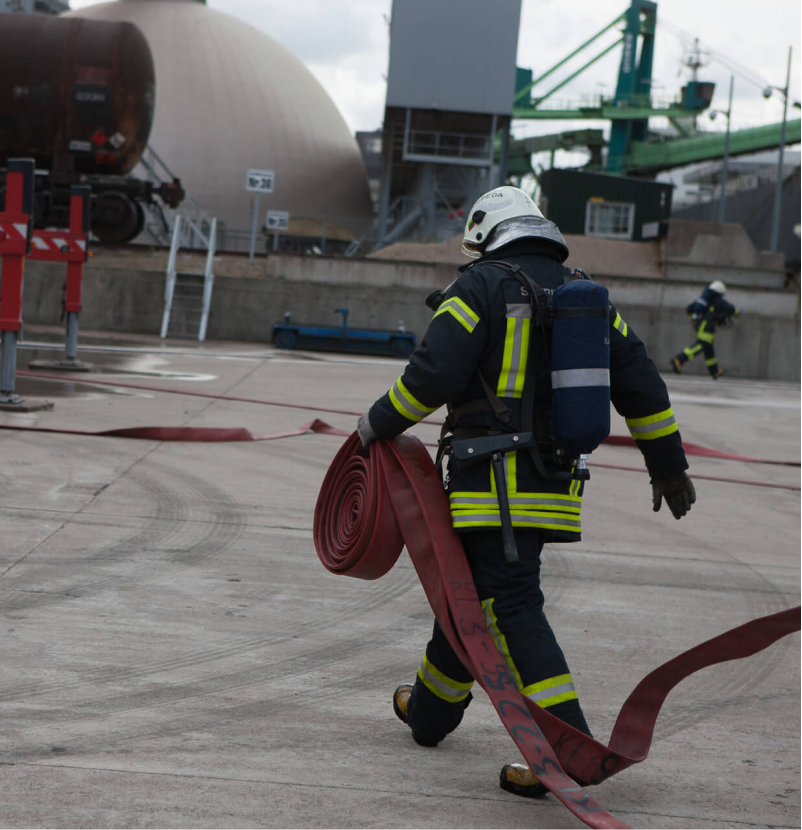
The terminal has an internal emergency plan for responding to emergencies, which covers the process of mitigation and liquidation of emergencies as well as the procedure for informing the special services.

Actions to be taken by the public in the event of notification of an industrial accident at UAB „Krovinių Terminalas“

The main causes of potential accidents are failures of equipment, deviations from established procedures and human error. These factors may lead to the release of petroleum or petrochemical products into the environment.

When notified of an accident at the Terminal by audible communication, residents must remain indoors and close (preferably seal) exterior doors, windows, balconies, vents and ventilation openings and wait for further information. Residents should also protect their respiratory system by covering mouth and nose with cotton wool or a wet towel.

If instructed (offered) to leave the house temporarily, it is required to switch off all energy sources, extinguish furnaces, and recommended to put any livestock in their sheds, provide feed and water, and seal shed doors and windows. When leaving the contaminated area, walk perpendicular to the direction of the wind (so that it blows sideways), only in open areas, and avoid ravines, closed courtyards, narrow streets, and densely bushed areas. Avoid running, walk at a normal pace.

Do not forget your neighbours. Inquire if they have heard the report, and if assistance is needed, call the general emergency number 112.

Follow the instructions and requirements of the emergency and special services during an accident.

Gyventojų veiksmai avarijos metu

If residents need further information

  • If notice the smell of hydrocarbons, please report it to the central control room of UAB „Krovinių Terminalas“, tel. no.: 8 46 391 086 (available 24 hours a day).
  • In case you want to familiarize yourself with the internal emergency plan and the safety report, which contain a more detailed description of the hazards of UAB Krovinių Terminalas operations, the emergency notification system, and the emergency response measures, you can consult Senior Safety Officer on Wednesdays from 9:00 to 10:00. The Terminal’s Senior Safety Officer will be happy to assist you on tel. no.: 8 46 391 081.
  • The Klaipėda City Municipality Civil Protection Office (34 Šaulių str. 34, tel. no.: 8 46 310 675) has the Klaipėda City Municipality external emergency plan.

If residents need further information

  • If notice the smell of hydrocarbons, please report it to the central control room of UAB „Krovinių Terminalas“, tel. no.: 8 46 391 086 (available 24 hours a day).
  • In case you want to familiarize yourself with the internal emergency plan and the safety report, which contain a more detailed description of the hazards of UAB Krovinių Terminalas operations, the emergency notification system, and the emergency response measures, you can consult Senior Safety Officer on Wednesdays from 9:00 to 10:00. The Terminal’s Senior Safety Officer will be happy to assist you on tel. no.: 8 46 391 081.
  • The Klaipėda City Municipality Civil Protection Office (34 Šaulių str. 34, tel. no.: 8 46 310 675) has the Klaipėda City Municipality external emergency plan.

Terminal‘s Security

The perimeter of the terminal is secured by a contracted security service. Access to the production area is subject to pass permissions. The area of the terminal is monitored at all hours by camcorders.

Information on the processing of image data   pdf-icon-img
Sauga

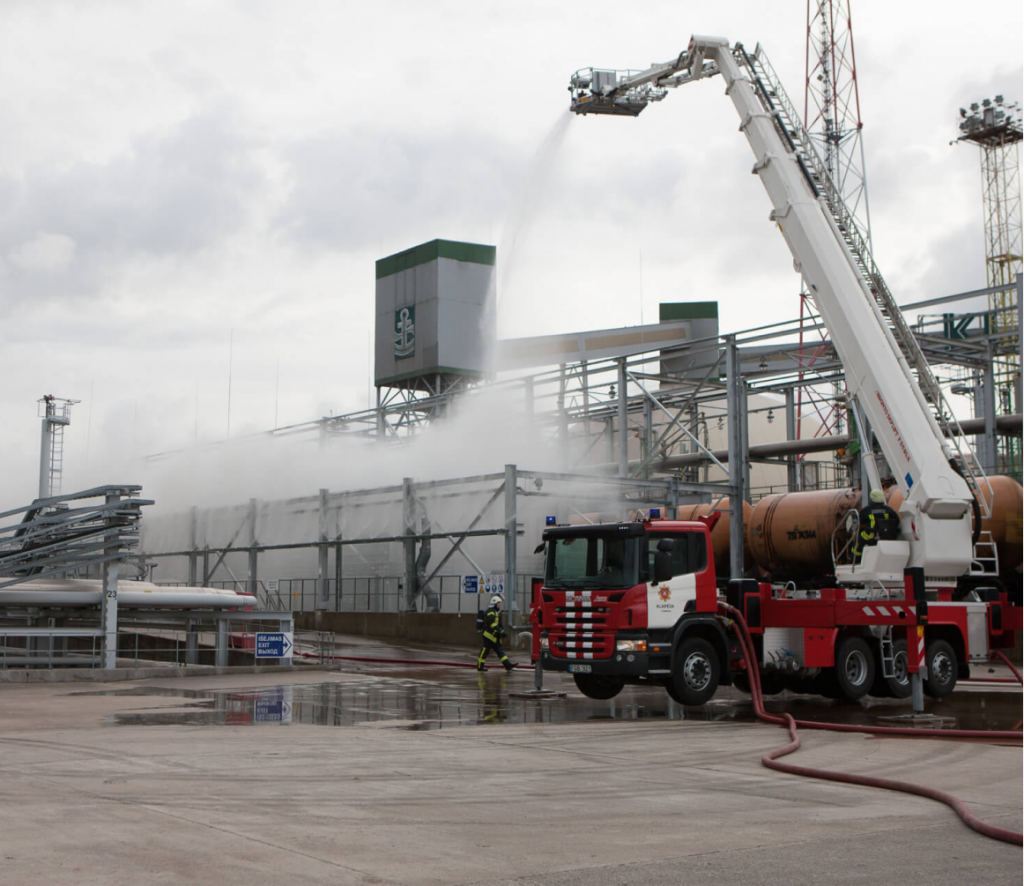
The Terminal is equipped with an automatic fire detection, extinguishing and suppression system consisting of:

  • a fire detection system with infrared flame detectors and manual emergency buttons;
  • a fire pumping station;
  • a ring network of fire suppression pipes;
  • 14 fire hydrants installed in the fire pipeline network;
  • 12 remote-controlled water cannons.

An automatic fire detection, extinguishing and suppression system is also installed in:

  • railway loading rack;
  • pumping stations No. 1 and No. 2
  • tank farms No 3 and No 5;
  • the vapour recovery unit;
  • tanker loading station.

Due to a high percentage of development of the territory, the following additional facilities were installed:

  • automatically controlled stationary water shields at the technological pumping stations;
  • automatically controlled stationary water shields at the railway loading rack;
  • an automatically controlled stationary water shield in the vapour recovery plant;
  • automatically controlled fixed water shutter in a fire pumping station.